EN
EN 中文
中文


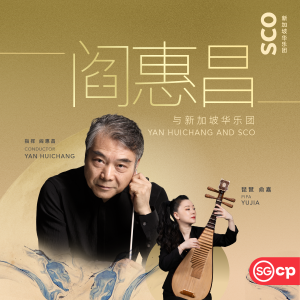
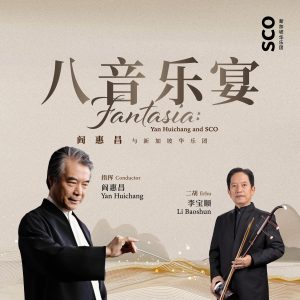
Yan Huichang is an internationally renowned conductor and composer. Since joining the Hong Kong Chinese Orchestra in 1997, he has been dedicated to advancing Chinese orchestra music through composition, instrument reform, conducting philosophy, crossover collaborations, and academic research. Under his broad vision, the Hong Kong Chinese Orchestra has consistently balanced the preservation of tradition with innovative explorations. The orchestra balances the individual Chinese instruments’ uniqueness with orchestral cohesion. This is achieved by by continuously adjusting and reconciling what it means to be “symphonic”. His vision has laid an important foundation for the development of Chinese orchestra music. The repertoire of tonight’s concert offers a glimpse into significant works from different periods of the Chinese orchestra’s pursuit of the “symphonic”.
Early Chinese orchestral compositions often sought inspiration from folk music. Drawing on his Hebei roots, Shi Wanchun uses the suona tune “Taojin Ling” as the theme for the variations that make up his Festival Overture. The piece, composed in sonata form, was originally written for Western symphony orchestra and later adapted for Chinese orchestra by Zhang Lie. Nie Er produced a remarkable body of work that remains widely cherished, despite his untimely passing at just twenty-three. His 1934 piece Spring Dawn on the Emerald Lake was later rearranged by several composers, most notably Liu Wenjin, who preserved the original melody while enriching the textures and range of tone colors. The two opening works exemplify the essence of early Chinese orchestra music, which uses simple yet evocative melodies to paint vivid scenes and convey deep emotion, reflecting the pure and sincere sentiments of the society from which they emerged.
The Terracotta Warriors Fantasia is Peng Xiuwen’s masterpiece, depicting the hardships and sorrow of Qin dynasty soldiers who spent years at war while their families longed for their return. The composer portrays the characters’ nuanced emotions. The majestic presence of the emperor’s troops stands in stark contrast to the melodies expressing the soldiers’ inner suffering and heroic pathos. Through carefully crafted orchestration, Peng Xiuwen creates a richly layered battlefield in sound, including the formidable momentum of the army, the clash of weapons, and the soldiers’ wails, cries, and shouts amid whistling winds and swirling snow. Yan Huichang has performed and recorded this piece multiple times, initially as a tribute to his late mentor Peng Xiuwen. Yan’s interpretation has gradually become a classic in the Chinese music world, noted for its masterful pacing, structural command, and emotional intensity.
Erhu Rhapsody No. 1, composed by Wang Jianmin in 1988, marked his first foray into composing for Chinese instruments. To date, he has completed six erhu rhapsodies. This series of works represents a significant milestone in erhu composition. These rhapsodies not only introduce performers to entirely new approaches to performing but also established new milestones in erhu technique and style. Wang Jianmin’s Erhu Rhapsody No. 2 demonstrates a high degree of structural, tempo, and rhythmic artistry. In terms of performance techniques, he developed an innovative erhu vocabulary, transforming folk song material into scale-based melodies, intertwining virtuosity with lyricism. The work incorporates diverse techniques such as rapid passages and sequences, placing very high demands on the performer’s technical skill and musical expressiveness alike.
Yan Huichang, like the last two composers featured tonight, hails from China’s northwest Shaanxi province and harbors a deep affection for its culture. Zhao Jiping’s The Desert Smoke, Mvt. IV: The Memory features a theme that unfolds through repeated development and subtle variations, tugging at one’s heartstrings. This piece was a favorite of Zhao’s late wife, to whom the composer dedicated. Yellow River Rhapsody by Cheng Dazhao draws on multiple folk songs from the northwest, transforming them into large-interval motifs which permeate the entire work. Through meticulous orchestration, rich harmonic textures, and dramatic dynamics, the piece evokes the grandeur of the Yellow River, flowing endlessly and transforming constantly. In the recapitulation section, the composer stages a powerful sonic dialogue, where the percussion section is pitched against all other musicians and the audience playing pallet drums.
This concert was curated by Li Baoshun, with Yan Huichang selecting works that he has performed repeatedly on tour. Through tonight’s program, the audience will witness the historical evolution of Chinese orchestra music in terms of sound and instrumentation and gain an appreciation of Yan’s achievements in advancing the symphonic development of the Chinese orchestra, particularly in the performance of large-scale works.